

The brand of our happy days
Materials guide
Taking care of your clothes means letting them live longer.
At Emile & Ida, we love natural materials, soft fabrics, comfortable knits, delicate embroideries and prints that tell a story. To preserve their colour, shape and feel, a few simple steps are all it takes.
The right habits to make your clothes last
Before each wash, we advise you to always check the care label sewn inside the garment. It remains the best guide for looking after your piece.
We also recommend always washing your clothes with similar colours.
-

Wash less, but better
A garment doesn't always need to be washed after being worn just once.
When it isn't stained, you can simply air it outdoors for a few hours.
When a wash is necessary, opt for a gentle cycle, at low temperature, with a suitable detergent, and for delicate pieces, use a laundry bag. This applies in particular to embroidery, crochet, knitwear, metallic threads, mukesh, screen prints and artisanal prints.
It limits friction in the machine and helps preserve the garment's details. -

Wash inside out
Turning your clothes inside out before washing helps better preserve colours.
It also preserves prints, embroidery and finishes. And for fine materials, use a laundry bag.
These are simple but valuable steps, especially for printed, embroidered, screen-printed or dyed pieces. -

Gentle spinning
Spinning too hard can crease, mark or weaken certain materials.
For delicate pieces, knits, viscose, khadi, embroidery or artisanal prints, choose a gentle spin.
For viscose, we recommend spinning at 600 rpm maximum. -

No tumble dryer
For the majority of our pieces, use of the tumble dryer is not recommended.
The heat of the drum can damage fibres, shrink certain materials, alter the shape of the garment or affect embroidery, prints and dyes.
We advise favouring natural drying, in the open air, away from a direct heat source. -

Gentle ironing
Always iron at a suitable temperature, ideally on the inside of the garment.
For delicate materials, embroidery, metallic threads, screen prints or prints, use a slightly damp cloth.


The materials
Each material has its own character and its own little requirements. Choose yours.

Cotton & organic cotton
Cotton is a natural, soft and easy-going material. It accompanies everyday life with simplicity, in summer as in winter.
Organic cotton is a natural fibre grown without pesticides, chemical fertilisers or GMOs, while respecting ecosystems and workers' health. It is washed in the same way as conventional cotton, with the same gentle care.
On our organic cotton pieces, slight marks or small variations may sometimes appear. These are not stains, but small impurities naturally present in the yarn. Less processed than conventional cotton, this material can therefore reveal a few singularities, which are part of its rawer, livelier look.
- Washing
- Wash at 30°C maximum, inside out, with similar colours. Prefer a gentle cycle to preserve the fibre, the colour and the shape of the garment.
- Avoid
- Washing too frequently, spinning too hard and tumble drying, which can wear the fibre out more quickly or cause slight shrinkage.
The Emile & Ida tip
Air drying is ideal. Gentle or medium ironing, preferably on the inside.

Wools
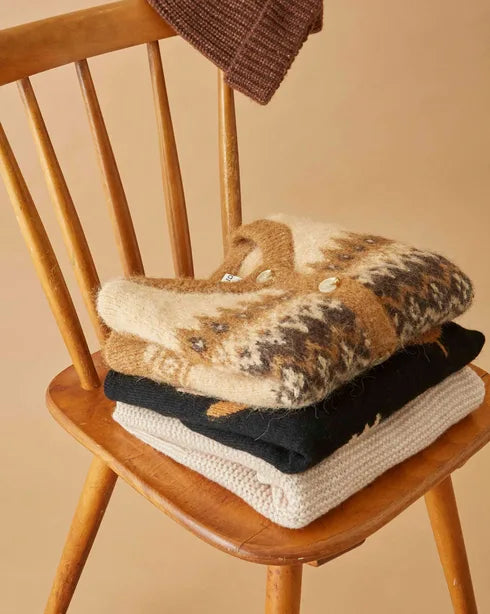
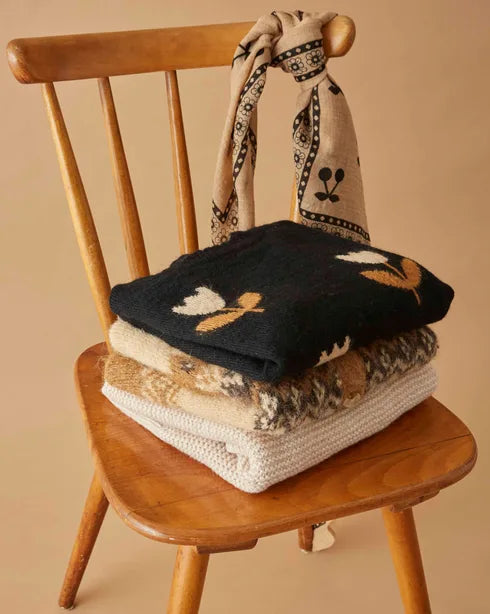
Wool, alpaca, mohair and their blends are natural, warm and delicate materials. They bring softness, loft and comfort to winter pieces.
Alpaca is valued for its warmth and lightness. Mohair, meanwhile, gives a fluffy, airy and very soft look. These precious fibres require very gentle care to preserve their shape, their fluffiness and their lovely drape.
- Washing
- Wash them as little as possible. These fibres like to be aired: when a piece isn't stained, a few hours in the open air are often enough to freshen it up.
Prefer a cold hand wash, or a very delicate wool programme if the label allows it. Use a wool-specific detergent, without rubbing or wringing the piece. Tumble drying is prohibited and set the spin to minimum. - Avoid
- Avoid hot water, spinning too hard, friction, the tumble dryer and drying on a hanger while the piece is damp. These actions can felt, shrink or deform the material.
The Emile & Ida tip
Always use a wool programme, cold, with minimum spin. Dry your pieces flat, on a towel, away from a direct heat source. To store them, fold rather than hang them: they will keep their shape better over time.

Denim
Denim is a hard-wearing material, made to be lived in and to develop a patina over time.
It doesn't need to be washed too often. When it isn't stained, you can simply air it.
- Washing
- Wash inside out, at 30°C maximum, with similar colours.
- Avoid
- Tumble drying, which can change the shape of the garment, and washing too frequently, which can make the colour fade more quickly.
The Emile & Ida tip
Denim may bleed slightly during the first washes. We advise washing it separately or with dark colours.

Linen & Flex
Linen is a natural, light and lively material. It creases easily: that is also what gives it its charm.
Flex, used on certain pieces from India, is a blend of cotton and linen fibre. Combined with cotton, it gives a natural, slightly textured and lively look. Hard-wearing, durable and not very prone to pilling, it keeps a feel close to cotton, with a more singular texture.
- Washing
- Wash at 30°C maximum, on a gentle cycle, with similar colours.
- Avoid
- Spinning too hard, which can mark the fibre, and tumble drying, which can change the shape of the garment.
The Emile & Ida tip
Air dry. For a smoother finish, iron slightly damp, on the inside.

Corduroy
Corduroy is one of our signature winter materials. Soft, warm and slightly luminous, it adds texture and comfort to seasonal pieces. Its appearance can change depending on the light and the direction of the pile: that is what gives it all its charm.
- Washing
- Wash your piece inside out, at 30°C maximum, with similar colours.
Choose a gentle cycle and a moderate spin to preserve the texture of the corduroy.
Tumble drying is prohibited. Air dry, away from a direct heat source. - Avoid
- Avoid friction, spinning too hard, bleaching agents and ironing directly on the corduroy.
The Emile & Ida tip
After drying, you can gently brush the corduroy in the direction of the pile to restore its look.

Viscose
We use very little viscose, and when we do, only in the women's collections on one or two blouses & dresses to add fluidity.
Viscose is a fluid, soft and pleasant-to-wear material. It gives the garment a lovely drape, but requires a little delicacy.
- Washing
- Wash cold on a delicate cycle, preferably inside out. Choose a gentle spin, at 600 rpm maximum.
- Avoid
- Tumble drying, spinning too hard and wringing the garment by hand. Too intense a spin can crease, mark or weaken the fibre.
The Emile & Ida tip
Once wet, viscose may feel stiffer or shrink slightly. It generally regains its drape after drying and gentle ironing on the inside.

Synthetic materials
We use very little polyester and seek to limit its use as much as possible. It may nevertheless be present in certain pieces, linings, threads or details, sometimes in a recycled version.
However, these synthetic materials are sometimes necessary, notably to add softness or ease.
Indeed, we may use polyester, polyamide or acrylic in knitwear, blended with wool. This does two things: first, it adds softness to the wool yarns. But also, wool is one of the materials that has undergone the biggest price increases in recent years, and sometimes we have to blend it in order to stay at a “reasonable” price level.
- Washing
- For sweaters blended with wool, wash cold, inside out, with similar colours, on a wool programme.
- Avoid
- Temperatures that are too high, tumble drying and ironing too hot, which can mark or damage the fibre.
The Emile & Ida tip
When a piece contains polyester, opt for a gentle wash and avoid washing too frequently.

Crochet
Our crochet pieces are made by hand. Each stitch takes time, know-how and particular attention.
This artisanal work makes each piece unique: slight differences may appear from one piece to another, in measurements or in stitches. Crochet is a delicate knit: avoid pulling the piece too much, wringing it out hard or hanging it when wet, in order to preserve its shape.
- Washing
- Wash by hand or on a very delicate cycle, cold or at 30°C maximum. If you machine-wash the piece, ideally use a laundry bag.
- Avoid
- Spinning too hard, tumble drying and hangers when the piece is wet.
The Emile & Ida tip
Dry flat, on a towel, to preserve the shape of the garment and the delicacy of the handmade work.

Terry
Terry knit is a soft, plush and comfortable material that we particularly love for summer. Recognisable by its small loops, it adds texture, flexibility and a very pleasant, enveloping feel when worn.
- Washing
- Wash your piece inside out, at 30°C maximum, with similar colours.
Choose a gentle cycle and avoid spinning too hard, which can crush the loops or alter the plushness of the material.
Tumble drying is prohibited. Prefer natural drying, in the open air, away from a direct heat source. - Avoid
- Avoid excessive friction, bleaching agents and too much fabric softener, which can weigh down the fibre and reduce its plush feel.
Also avoid ironing too hot, which could flatten the loops of the material.
The Emile & Ida tip
To preserve all the loft of the terry knit, wash the piece before wearing it: the material may flatten slightly during transport, but it will naturally regain its volume after washing.
Gently shake the piece after washing, then let it dry naturally. Once dry, you can reshape it by hand to restore its lovely drape.

Smooth leather & faux suede
Some of our shoes or accessories may be in smooth leather or faux suede. These materials are not machine washable.
- Caring for smooth leather
- Clean gently with a soft, slightly damp cloth. Leave to dry in the open air, away from a direct heat source. You can occasionally nourish the leather with a suitable care product.
- Caring for faux suede
- Avoid water as much as possible. Brush gently with a suitable brush to remove small marks and revive the look of the material.
The Emile & Ida tip
We advise waterproofing your shoes before first use, then regularly depending on use.
Delicate craftsmanship and finishes
At Emile & Ida, every detail tells a story of craftsmanship.
In Portugal, our partner workshops have accompanied us since our beginnings with their expertise in knitwear, screen printing, dyeing and soft materials, often within a certified and responsible approach.
In India, we find the beauty of artisanal gesture: block print, khadi, hand embroidery, smocking, mukesh, scalloped edges or embroidered buttons.
These techniques bring to life pieces that are sensitive, unique and full of character. They deserve particular care, to preserve their softness, their colours and all the poetry of their details.

Khadi
Khadi is an Indian material made entirely by hand, from spinning to weaving. It is an artisanal, living fabric that bears the mark of the human hand, and offers unrivalled softness and drape. We love using this material to create blouses that are both elegant and poetic.
Its variations in texture or weave are not flaws: they tell of the artisan's hand and make each piece singular.
- Washing
- Wash khadi gently, cold or at 30°C maximum, inside out.
- Avoid
- Prolonged soaking, spinning too hard, tumble drying and direct exposure to full sun.
The Emile & Ida tip
Air drying is ideal. Gentle or medium ironing, preferably on the inside.

Block print & artisanal prints
Block print is an ancestral Indian artisanal craft. The fabric is printed by hand using wooden blocks engraved for each colour, motif after motif. We use block print a lot on our romantic, original and charming dresses and blouses.
This technique requires precision, patience and mastery of gesture. The nuances and irregularities born of the artisan's hand create the poetry and singularity of each piece.
- Washing
- Wash inside out, cold or at 30°C maximum, with similar colours.
- Avoid
- Prolonged soaking, harsh detergents, bleaching agents, tumble drying and drying in full sun.
The Emile & Ida tip
For the first washes, wash the piece separately or with similar colours, in order to preserve the vibrancy of the print.

Embroidery, mukesh, smocking & metallic threads
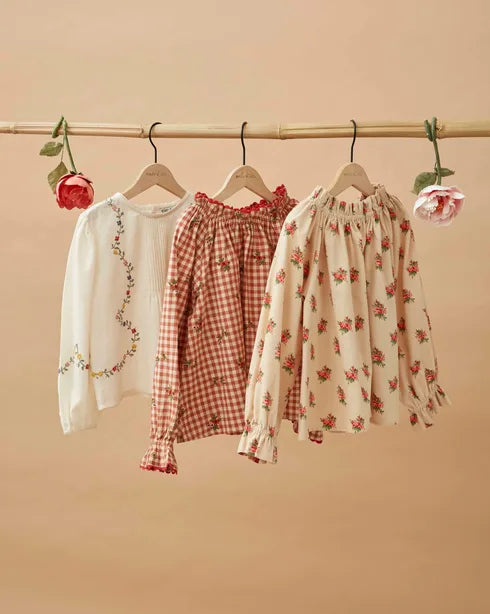
Embroidery, smocking, mukesh and metallic threads are precious details. They bring light, texture and character to the garment. Thanks to this know-how, we create blouses and dresses that are both elegant and timeless, ideal for a special occasion.
Mukesh is an Indian artisanal craft that uses tiny metallic threads or flecks to illuminate the fabric. Smocking, meanwhile, plays with volume, texture and the elasticity of the fabric through meticulous work of gathers and stitches.
- Washing
- Always wash these pieces inside out, ideally in a laundry bag. Choose a delicate cycle, cold or at 30°C maximum.
- Avoid
- Tumble drying, spinning too hard and ironing directly on embroidery, mukesh, smocking or metallic threads.
The Emile & Ida tip
If needed, iron around the detail or use a slightly damp cloth, without pressing directly on the embroidered, smocked or metallic elements.

Embroidered buttons, scalloped edges & little details
Certain details make up all the poetry of a piece: embroidered buttons, scalloped edges, contrasting finishes or small appliquéd elements. We almost always add these little surprises to our blouses and our ruffled-collar dresses in particular, poetic details that are a signature of the Emile et Ida brand.
These details are often made with care, sometimes by hand, and require gentle care to keep their texture and hold.
- Washing
- Wash inside out, cold or at 30°C maximum, ideally in a laundry bag if the piece has fragile details.
- Avoid
- Tumble drying, spinning too hard, repeated friction and ironing directly on the details.
The Emile & Ida tip
Before washing, fasten the buttons and turn the garment inside out to limit friction in the machine.

Screen prints
Screen prints are prints deposited on the surface of the fabric. They require a gentle wash to preserve their colour, texture and hold.
- Washing
- Always wash the garment inside out, cold or at 30°C maximum.
- Avoid
- Tumble drying, prolonged soaking, spinning too hard and ironing directly on the screen print.
The Emile & Ida tip
Always iron on the inside or use a slightly damp cloth.

Specific dyes
Some of our pieces are dyed to achieve a particular colour, deep or slightly irregular.
The piece-dyeing technique is carried out once the garment has been made. It gives the colour a lively, sometimes slightly nuanced look.
Reactive dyeing produces bright, long-lasting colours, by making the colour penetrate to the heart of the fibre.
Products made with this type of dyeing develop a patina over time.
- Washing
- Wash inside out, cold or at 30°C maximum, with similar colours.
- Avoid
- Prolonged soaking, bleaching agents, overly harsh detergents and drying in full sun.
The Emile & Ida tip
The first washes may cause the colour to bleed slightly. We advise washing the piece separately or with similar colours.
If in doubt
Always choose the gentlest option: use a laundry bag, delicate cycle and cold water, light spin, natural drying and ironing on the inside.
And above all, rely on the garment's care label: each piece has its own particularities.


